
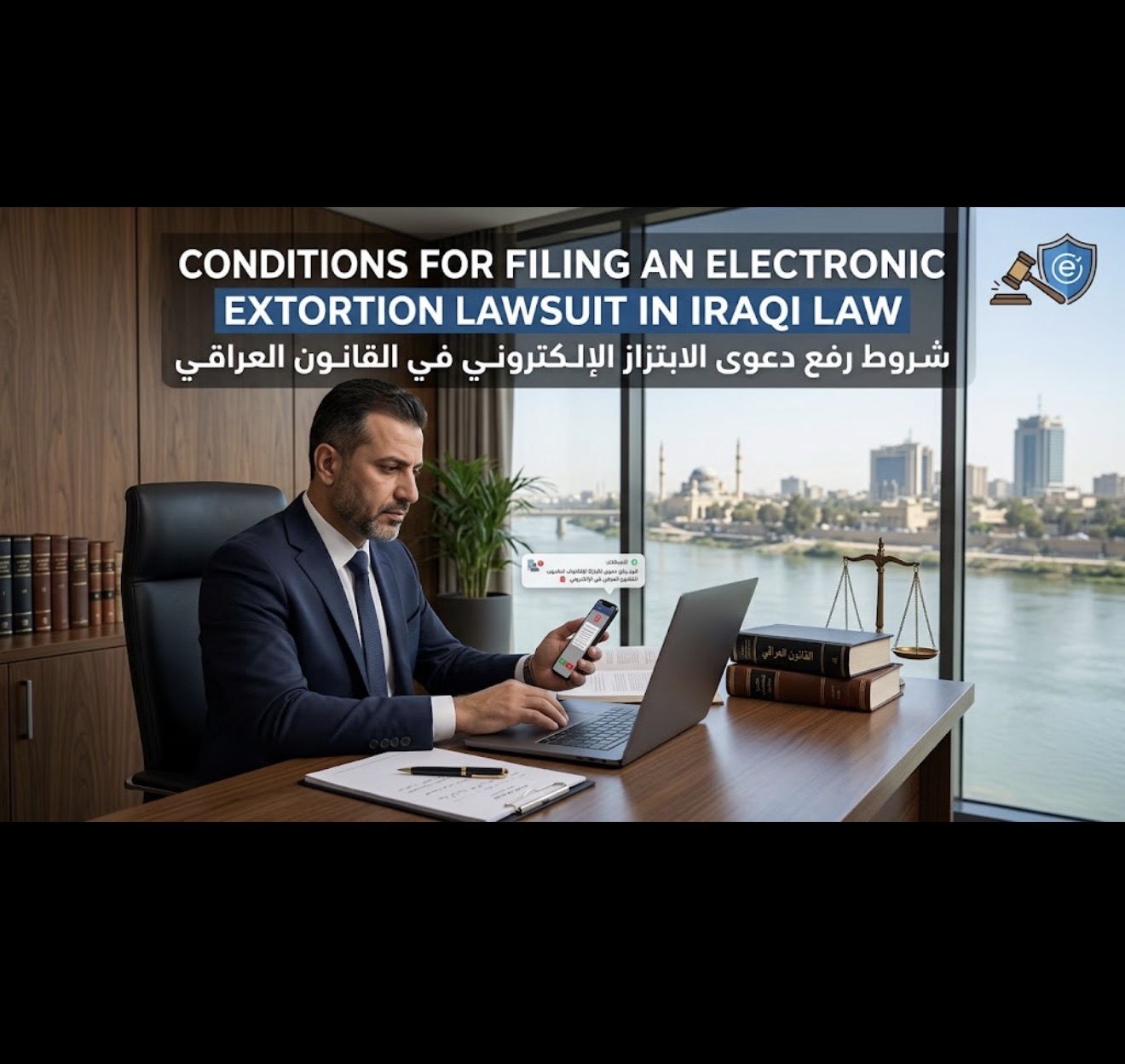
Conditions for Filing an Electronic Extortion Lawsuit in Iraqi Law: Your Legal Guide to Protecting Your Rights
- Introduction With the massive development of social media, electronic extortion crimes have become among the most prominent cases brought before Iraqi courts. Many individuals face pressures and threats involving the publication of personal photos or information in order to extort them financially or morally. What is the legal stance on extortion in Iraq? And what are the proper steps to file a lawsuit and ensure the recovery of rights? We clarify this in the following lines in accordance with the Iraqi Penal Code.
- Legal Classification of Electronic Extortion under Iraqi Law There is no literal, independent article named "electronic extortion" in the Iraqi Penal Code No. 111 of 1969 (as amended), but the Iraqi judiciary deals with these crimes based on strict legal provisions, most notably: Article 430 of the Penal Code: Which punishes anyone who threatens another person with committing a felony against their person, property, or by attributing matters that compromise honor or reputation, with the intent of compelling them to perform an act or refrain from it (with penalties reaching imprisonment or detention depending on the circumstances of the threat). Cybercrime legislation (or the provisions available in the Penal Code related to the misuse of telecommunication devices): Which address account hacking and assaults on personal privacy.
- Elements and Conditions Required to File a Lawsuit To file a successful lawsuit before the competent investigative court, the essential elements of the crime must be present along with supporting evidence, primarily: Occurrence of Threat or Pressure: The existence of messages, audio recordings, or phone calls proving that you are being subjected to extortion. Identifying the Perpetrator: Knowing the identity of the extortionist or having technical evidence that helps security authorities track them down and reach them. Standing and Interest: The complainant must be the person directly harmed by the crime.
- Legal Steps and Practical Procedures for Filing a Complaint If you are subjected to extortion, we advise taking the following professional steps and refusing to surrender to the extortionist's demands:
- Gather Evidence and Do Not Delete It: Keep copies (screenshots) of all chats, links, and phone numbers or fake accounts belonging to the extortionist without erasing anything.
- Consult a Specialized Lawyer: To closely monitor the legal procedures and accurately draft the complaint in a way that ensures its correct legal classification before the judiciary.
- Head to the Competent Security Authorities: File an official report with the Directorate of Cybercrime affiliated with the Ministry of Information (or Ministry of Interior), or the local investigative court, where the complaint is tracked confidentially and securely to protect the victim.
- Conclusion and Call to Action Standing up against an extortionist begins with immediate reporting and a lack of fear; Iraqi law and the judiciary are fully capable of protecting your rights and safeguarding your dignity with complete confidentiality. If you are facing a similar legal issue or need precise legal consultation and immediate judicial follow-up by specialized lawyers, you can explore our legal services or contact us directly via the phone numbers provided on the website to receive the necessary support.