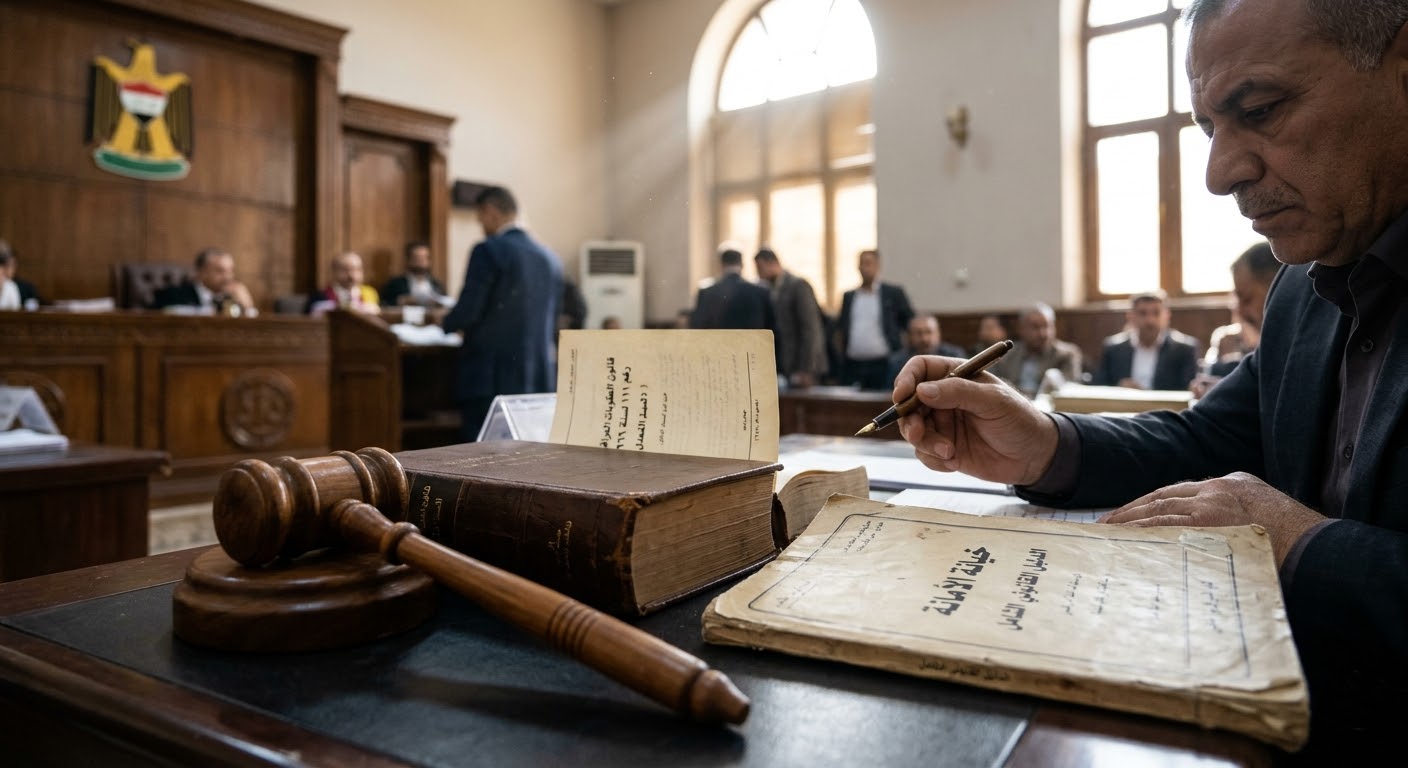
The Crime of Breach of Trust in Iraqi Law: Conditions, Elements, and Legal Penalties Crimes of assault on property are among the most common cases brought before Iraqi criminal courts, with the crime of breach of trust at the forefront due to its hazardous impact on undermining trust between individuals and companies. When does an incident legally constitute a breach of trust? What are the conditions and elements required by the Iraqi legislature to convict the perpetrator? And what is the prescribed penalty? In this comprehensive legal guide, we shed light on the details of the crime of breach of trust in accordance with the provisions of the Iraqi Penal Code No. 111 of 1969 (as amended). First: The Legal Concept of Breach of Trust in Iraq The Iraqi Penal Code defines breach of trust as: The appropriation by the perpetrator of movable property owned by another, which was handed over to them pursuant to one of the trust contracts, with the intent to take ownership of it and harm the right holder. "Trust contracts" refer to contracts whereby the possession of property is temporarily transferred to the perpetrator (rather than its ownership), such as: Deposit contracts (safekeeping of property). Commodatum / loan for use contracts (borrowing an item to use and return). Agency, whether paid or unpaid. Lease or mortgage. Employment with companies or individuals (handing over goods or funds to work with). Second: Elements of the Crime of Breach of Trust in Iraqi Law For a criminal lawsuit to be filed and a judicial conviction for breach of trust to be issued, four essential elements must be met:
- The Material Element (The Act of Delivery and Embezzlement) The crime is not considered a breach of trust unless the property is delivered to the accused voluntarily and pursuant to one of the aforementioned trust contracts. The material element is fulfilled by the occurrence of the criminal act, which includes: Embezzlement: The perpetrator retaining the property for themselves. Dissipation or Destruction: Spending the property, selling it, or intentionally destroying it with the intent to deprive the owner of it. Refusal to Deliver: Refusing to return the property upon the owner's request despite the expiration of the contract term or the cessation of the cause.
- The Subject Matter of the Crime (Movable Property) The law requires that the property subject to the crime be: Movable: (such as money, goods, documents, jewelry); breach of trust does not apply to immovable property (such as land or buildings). Owned by Another: The property must belong to the victim or someone other than the perpetrator. Having Financial Value: Even if minimal.
- The Moral Element (Criminal Intent) Breach of trust is an intentional crime requiring the presence of criminal intent in the perpetrator, which consists of two elements: Knowledge: The perpetrator knows that the property in their possession does not belong to them and that it was entrusted to them under a contract. Will: Their free will is directed toward acquiring or dissipating the property while knowing that this constitutes a crime and inflicts harm on its owner. Fourth: The Legal Penalty for Breach of Trust in Iraq The penalty prescribed for the crime of breach of trust varies according to Article (453) and subsequent articles of the Iraqi Penal Code, where the legislature stipulated the following: Original Penalty: Imprisonment is applied to anyone who embezzles or dissipates movable property handed over to them pursuant to a trust contract. Aggravating Circumstances (Aggravated Penalty): The severity of the penalty increases (and may reach imprisonment with hard labor/rigorous imprisonment) in certain cases, such as: If the perpetrator is a sales agent, collection officer, or cashier. If the property was handed over to the accused in their capacity as a public employee or a person entrusted with a public service in connection with their job. If the crime was committed by individuals who exploit professional or commercial trust. Fourth: Legal Procedures for Filing a Breach of Trust Complaint in Iraqi Courts If you have fallen victim to a breach of trust and wish to recover your legal rights, you can follow these steps:
- Gathering Evidence and Documents: Preparing all probative contracts (employment contract, lease agreement, receipt voucher, WhatsApp messages, or a written acknowledgment of receiving the funds).
- Filing the Complaint: Going to the police station located within the jurisdiction where the crime occurred, or directing the complaint directly to the competent investigative judge via public prosecution or through a specialized lawyer.
- Investigation and Inquiry: The investigative judge listens to the statements of the complainant, summons the respondent, and conducts the necessary investigations to prove the delivery of the property and the act of embezzlement.
- Referring the Case to the Misdemeanors Court: Upon completing investigations and confirming the evidence, the accused is referred to the competent Misdemeanors Court to issue a fair judgment against them and obligate them to return the funds and pay compensation. Consult a Specialized Lawyer to Protect Your Legal Rights Cases of breach of trust require high precision in drafting criminal complaints and presenting evidence to accurately establish the elements of the crime before the investigative judge and competent courts. If you are facing a legal dispute or need to draft legally protected contracts to avoid such disputes, do not hesitate to contact us to obtain professional legal advice and optimal legal representation. Mizan Al-Qanoon Law Firm and Legal Consultations Attorney Mohammed Abdulqadir Al-Hamdani Firm Address: Baghdad, Zayouna, near the Royal Hall